

When comparing scalping vs day trading, most new traders find day trading the better starting point. It offers more time for analysis, fewer trades to manage, and lower impact from spreads and commissions. Scalping can deliver quick, frequent profits, but its lightning-fast execution and constant attention make it more suited to highly experienced traders with advanced technology.
That said, the “better” approach ultimately depends on your personality and resources. If you thrive on rapid decision-making, have access to ultra-fast execution, and can stay focused for hours without distraction, scalping may suit you. If you prefer a balanced pace and want room to evaluate setups carefully, day trading is usually the smarter and more sustainable choice.
What Is Scalping?
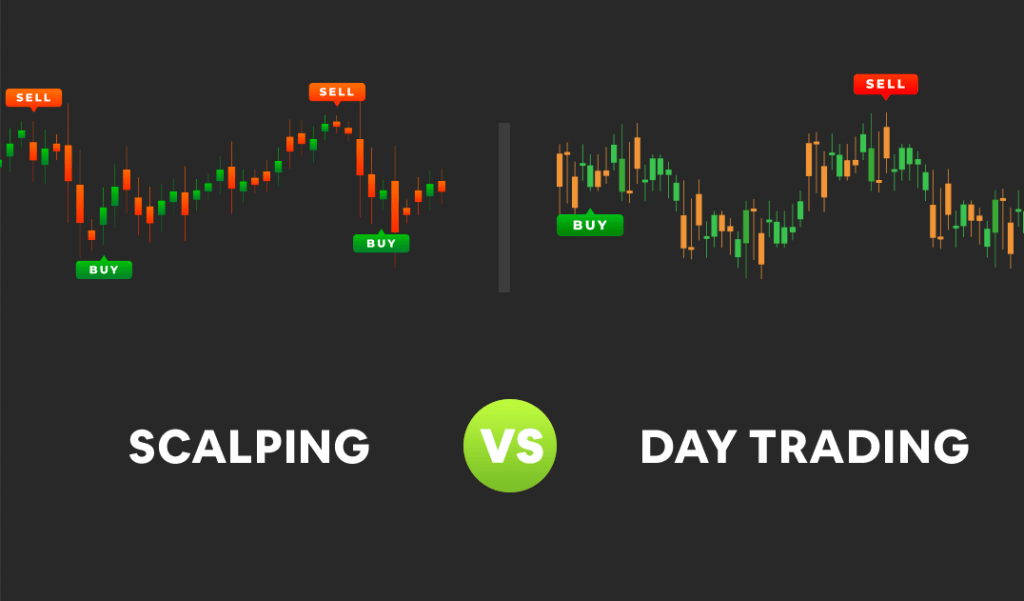
Scalping is an ultra-short-term trading technique where traders open and close positions within seconds or minutes. The goal is to capture small price changes repeatedly throughout a session. Scalpers typically use one-minute or tick charts and may place dozens, even hundreds, of trades in a single day.
Because profits per trade are tiny—often just a few pips in forex or a few cents in stocks—scalping demands high liquidity and very tight spreads. Popular markets for scalping include major currency pairs like EUR/USD, high-volume equities such as Apple or Tesla, and liquid crypto pairs like BTC/USDT. Fast execution and low transaction costs are critical, making broker selection and technology essential components of this strategy.
Also Check: Best Forex EA
What Is Day Trading?
Day trading involves opening and closing trades within the same trading day, but positions can last from several minutes to a few hours. Day traders focus on slightly larger price swings than scalpers, using timeframes such as 5-minute, 15-minute, or hourly charts. Their goal is to capture significant intraday trends while avoiding overnight risk.
This approach suits traders who prefer fewer transactions and more time for analysis. Day traders often combine technical indicators—moving averages, RSI, and volume analysis—with fundamental catalysts like earnings releases or economic data. Common markets include U.S. equities, futures contracts on indices like the S&P 500, and liquid forex pairs.
Key Differences: Scalping vs Day Trading
Time Commitment:
Scalping requires constant attention to the screen, often for entire market sessions, because trades last seconds to minutes. Day trading allows short breaks and can be planned around key market hours.
Trade Frequency:
Scalpers execute numerous trades daily to accumulate small gains, whereas day traders typically take a handful of well-researched trades.
Risk and Reward:
Each scalp trade carries a very tight stop-loss, limiting risk per position but requiring a high win rate. Day trading targets larger moves, so individual trade risk may be slightly higher, but the potential reward per trade is greater.
Transaction Costs:
High trade frequency in scalping means commissions and spreads have a larger impact on profitability. Day traders, with fewer trades, are less sensitive to these costs.
See Also: Best Forex Trading Platforms
Choosing the Right Trading Style for Your Personality
Selecting between scalping vs day trading depends on more than market knowledge. Scalping demands lightning-fast decision-making, emotional discipline, and the ability to remain focused for long stretches. It can be stressful for those who dislike constant pressure.
Day trading offers a more balanced pace. Traders have time to plan entries and exits and can fit their strategy into specific market sessions—such as the first two hours of the New York Stock Exchange or the London forex session. If you prefer analysis over adrenaline, day trading may be the better fit.
FAQs
Can beginners start with scalping?
Beginners often find day trading more manageable. Scalping’s rapid pace and high trade frequency can be overwhelming without experience.
What markets are best for scalping vs day trading?
Highly liquid markets—major forex pairs, large-cap stocks, and top crypto pairs—are ideal for both. Scalpers need the tightest spreads and fastest execution.
How much capital is required?
Capital needs vary by market and broker. Scalpers often need more to offset commission costs, while day traders can start smaller but must meet margin requirements.
Is one style safer than the other?
Neither is inherently safer. Both require strict risk management. Day trading may feel less intense because of fewer trades and slightly longer timeframes.
You May Also Like: Best Risk Management Strategy in Forex Trading
