

Risk is an unavoidable part of trading. Whether you are buying stocks, trading futures, or entering the fast-moving forex market, every position carries the possibility of loss. Successful traders accept this reality and focus on protecting their capital first. The best risk management strategy is not a single tactic but a set of principles and tools that help you survive market volatility and grow steadily over time.
Trading without a plan is like sailing without a compass. Markets can change direction in seconds, and emotions such as fear or greed often lead to impulsive decisions. A well-designed approach to how to manage risk acts as your safety net. It protects your account during losing streaks, helps you stay disciplined, and ensures that one bad trade never wipes out months of hard work.
Core Principles of an Effective Risk Management
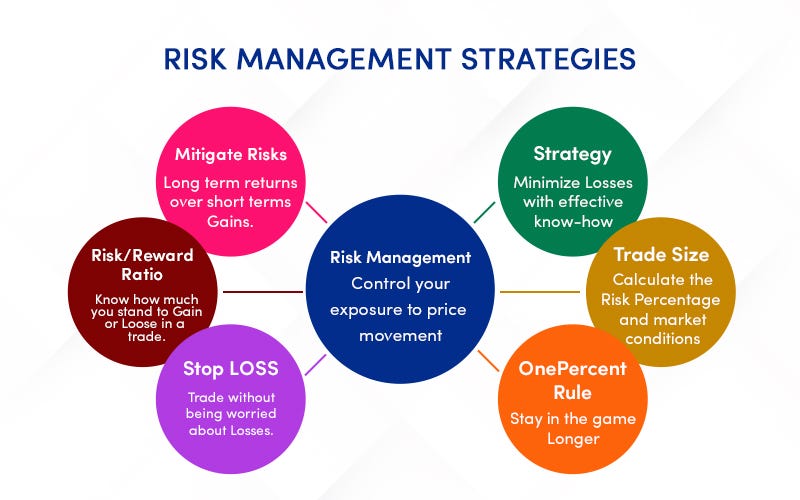
The following principles form the foundation of the best risk management strategy across all markets, including stocks, commodities, and risk management in forex trading.
1. Determine Risk Per Trade
Professional traders rarely risk more than 1–2% of their trading capital on a single position. For example, with a $10,000 account, risking 1% means a maximum loss of $100 per trade. This keeps losses small and allows you to recover even after a series of losing trades.
2. Set Stop-Loss Orders
A stop-loss order automatically closes your position when the market moves against you beyond a predetermined level. Stop-losses remove guesswork and emotional bias, ensuring that you exit trades before small losses become large ones. In forex, setting stops based on technical levels such as recent support or resistance helps maintain consistency.
Also Check: Best Forex EAs
3. Use Proper Position Sizing
Position sizing links directly to your risk-per-trade rule. By calculating the size of each trade relative to your stop-loss distance and account balance, you maintain consistent risk. For example, if your stop is 50 pips away and you only want to risk $100, you can calculate the exact lot size to use in risk management in forex trading.
4. Diversify Across Instruments
Never place all your capital in a single currency pair, stock, or commodity. Diversification reduces the impact of a loss in one asset. A trader might spread risk across major forex pairs, indices, and commodities to create a balanced portfolio.
5. Keep Leverage Under Control
High leverage magnifies both profits and losses. Many brokers offer leverage of 1:500 or higher, but responsible traders use it carefully. Limiting leverage to a moderate level—such as 1:10 or 1:20—can prevent sudden margin calls and is essential for long-term risk management in forex trading.
Check Also: Best Forex Trading Platforms
Building a Personal Risk Management Plan
The best risk management strategy is one you can follow consistently. Here’s how to design your own plan:
Begin by assessing your own risk tolerance. Every trader has a different comfort level with losses. A conservative investor may limit risk to 0.5% of account equity per trade, while a more aggressive trader might accept 2%. Knowing this number in advance sets the foundation for all future decisions.
Next, create a detailed trading journal. Record every trade, including entry and exit points, stop-loss levels, and the reasoning behind each position. Regularly reviewing this journal reveals patterns in your behavior—both good and bad—so you can refine your strategy and avoid repeating mistakes.
It’s equally important to follow a tested trading system. Risk management works best when paired with a proven edge. Back-test your strategy on historical data and practice on a demo account until you are confident it performs consistently under different market conditions.
Finally, remember that markets evolve. A personal risk plan is not a one-time exercise; it requires ongoing review. Adjust position sizes, stop-loss parameters, or diversification tactics as market volatility, account size, or personal circumstances change.
The Role of Psychology
Even the strongest plan fails if emotions take over. Greed may tempt you to increase position size after a winning streak, while fear may cause premature exits. Developing discipline—through meditation, exercise, or simply taking breaks—supports the technical side of how to manage risk.
Modern trading platforms provide risk-management tools such as trailing stops, margin alerts, and real-time analytics. Use these features to stay informed. Many brokers also offer negative balance protection, ensuring you never lose more than you deposit.
Also Read: Scalping vs Day Trading
FAQs
How much of my account should I risk per trade?
Most professional traders risk no more than 1–2% of their account on any single trade. Conservative traders may choose even less.
What is the role of stop-loss orders?
Stop-loss orders automatically close a trade when the market moves against you beyond a set level, helping limit losses and remove emotional decision-making.
Is diversification necessary in forex trading?
Yes. Even though forex pairs are related, spreading your trades across different currency pairs or markets reduces the impact of a loss in one position.
